
Instead of Posh - Prevention of Sexual Harassment Act (POSH)
Building Safe and Compliant Educational Institutions
Building Safe and Compliant Educational Institutions
A comprehensive program for higher educational institutions to ensure compliance with the POSH Act, aimed at cultivating a safe and sensitive campus.
To ensure every student can learn without fear, institutions must prioritize education on preventing sexual harassment. Recent data from the UGC's SAKSHAM portal for the 2022–2023 academic year reports 378 cases of sexual harassment across 238 universities, while an alarming 70% of incidents remain unreported.
In India, the POSH Act (2013) provides a statutory framework to safeguard the dignity, safety, and rights of women in higher educational institutions and workplaces. However, legal compliance alone is not enough.
There is an urgent need for a deep, behavior-driven cultural transformation within educational institutions and workplaces, one that fosters respect, accountability, and a zero-tolerance approach to harassment.
To support institutions in making this shift from awareness to action, the SafeCampus Certification Program offers a structured and outcome-driven approach to building safer campuses. Designed to help institutions strengthen their systems, sensitise their communities, and meet statutory POSH requirements, the program moves beyond legal compliance to embed lasting behavioural change through the Understand–Report–Act–Prevent framework.
Our flagship POSH Certification Program, selected under NEAT 6.0 by the Ministry of Education and AICTE, places us among a distinguished group of innovators showcased on the National Educational Alliance for Technology platform. The program provides institutions with a comprehensive and practical framework to strengthen safety systems, improve reporting mechanisms, and build an informed, sensitized campus community.
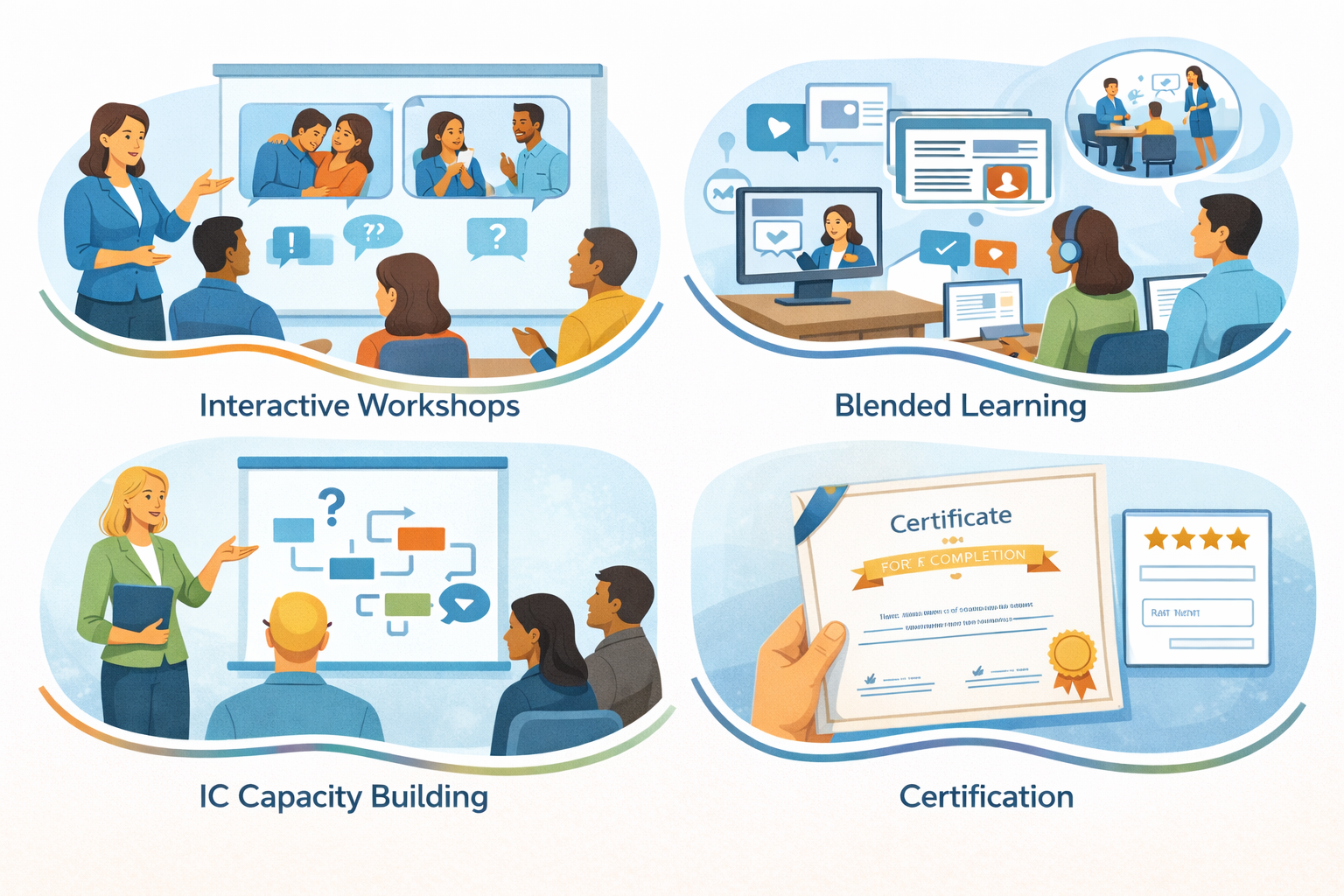
Essentials and Excellence, crafted to meet the needs of diverse stakeholder groups.
Delivered through face-to-face sessions, online modules, and Hindi/English options for maximum accessibility.
Tailored modules for faculty, students, and Internal Committees.
A fully digital, interactive learning platform to support continuous training.
Empowering student champions to drive sensitization and peer learning.
Secure, verifiable digital certificates for all participants.
SafeWorkplace is designed to support organizations in building environments where professional boundaries, respect, and accountability are clearly understood and practiced.
Unlike compliance, workplace interactions are shaped by hierarchy, performance pressures, and power dynamics, making it harder to recognize, question, or report inappropriate behaviour. While the POSH Act (2013) provides a legal framework, many organizations continue to face gaps in awareness, confidence, and consistent implementation.
SafeWorkplace addresses this by combining legal clarity with real-world workplace context, enabling employees not just to understand policies, but to apply them in everyday professional situations.
Workplace sexual harassment often operates in subtle ways, through tone, access, authority, or dependency, making it difficult to identify and address.
This highlights a key gap: policies may exist, but without clarity and trust, they are not always used.
SafeWorkplace focuses on how behaviour plays out in real work environments, not just what the law states.
Helping employees recognise how harassment can show up within professional relationships, hierarchies, and informal workplace interactions.
Using realistic scenarios such as meetings, feedback conversations, travel, and digital communication to build practical understanding.
Clarifying how Internal Committees function, what reporting looks like in practice, and how timelines and processes work.
Building confidence to respond appropriately, whether as an individual, colleague, or manager.
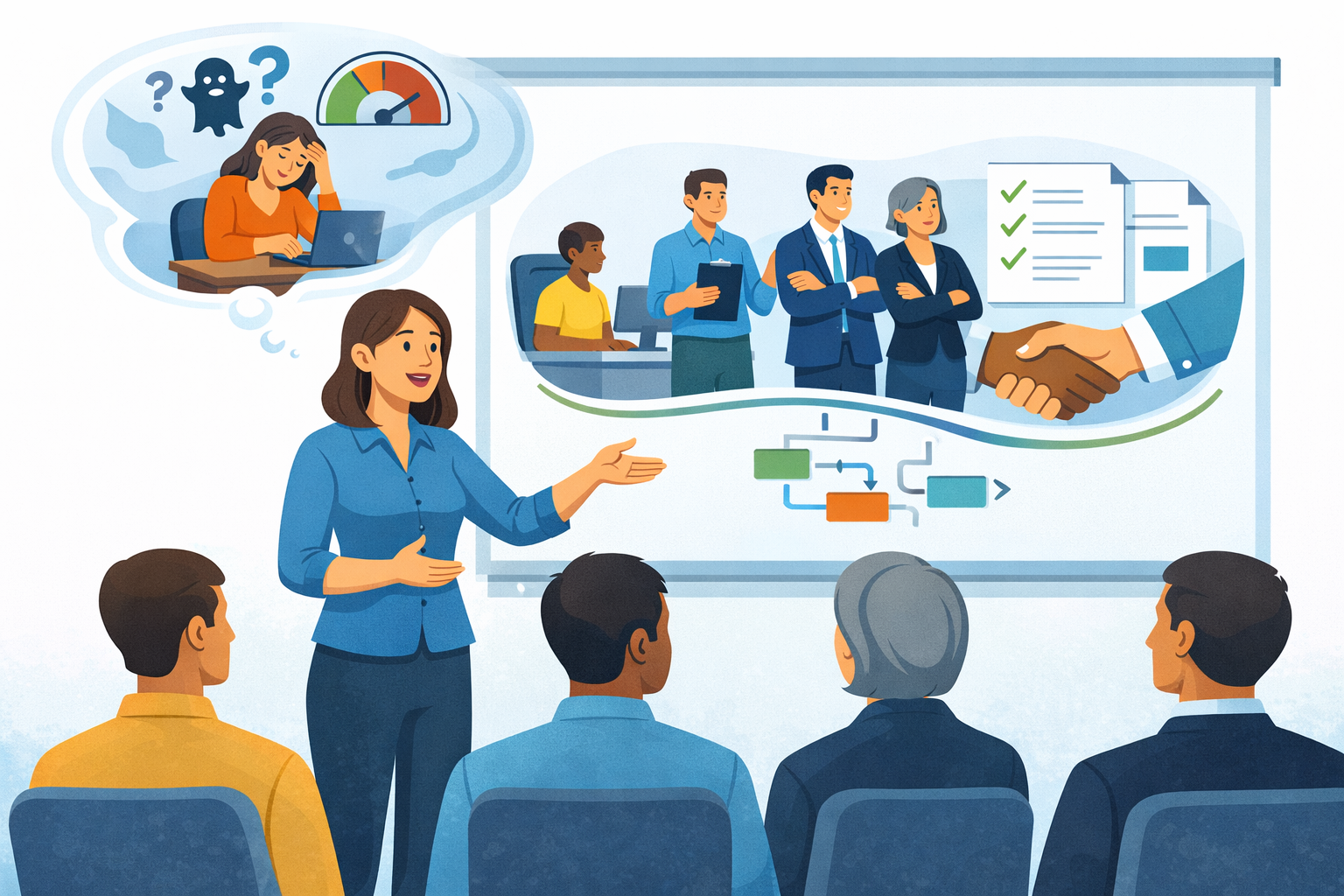
SafeWorkplace is not positioned as a compliance checklist, but as a workplace behaviour intervention.
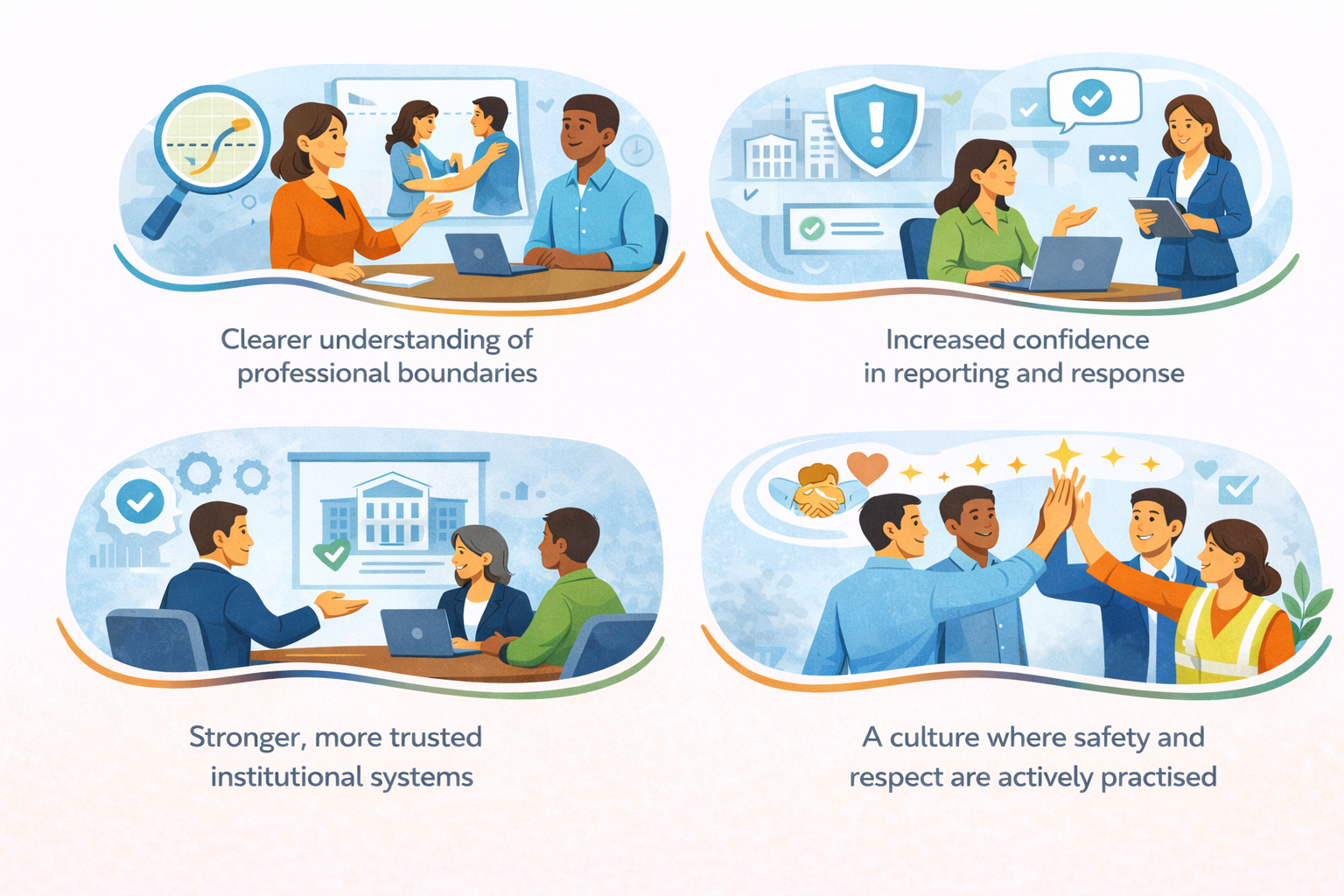
SafeWorkplace enables organisations to move towards:
INSTITUTIONS CERTIFIED
EDUCATORS TRAINED
STUDENTS REACHED
STATES COVERED
Start your institutional certification journey with our comprehensive digital learning modules
Start Certification →
Beneficiaries: 5,000
Complete POSH and POCSO compliance achieved, 50+ educators trained, safety audit framework implemented
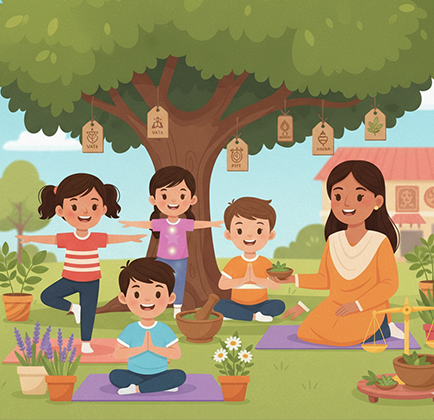
The Young Yogi: Simple, practical approaches to building lifelong health through daily habits rooted in traditional wisdom.
Health, Rights and Choices: Engaging, age-appropriate learning that enables young people to understand their bodies, relationships, and rights with clarity and confidence.
Mindful Minds: Modules focused on emotional awareness, resilience, and creating supportive environments.